
After a workplace accident in Italy that seriously injures or kills a worker, the public prosecutor opens criminal proceedings to establish who had the duty to prevent that risk. The employer, managers and supervisors may be placed under investigation, sometimes the client who commissioned the work too; alongside the individuals, the company itself is often liable.
Liability does not depend on the title on the organisation chart but on who actually held the safety powers and duties. That is why a well-drafted delegation of functions, the technical reconstruction of the accident and the choices made in the first weeks weigh on the outcome more than most expect.
01
Who is liable: employer, managers and supervisors
Italy’s consolidated health and safety act (Legislative Decree no. 81 of 2008) spreads the duties across different roles. The employer (datore di lavoro) is whoever is responsible for the organisation or production unit because they hold the decision-making and spending powers; the manager (dirigente) implements the employer’s directions, organising the work and overseeing it; the supervisor (preposto) oversees the activity and checks that workers carry it out correctly (art. 2). These positions also bind anyone who exercises those powers in practice without a formal appointment (art. 299).
Since December 2021 supervisors’ duties have been stricter: on noticing unsafe behaviour they must step in and, if it persists, stop the worker’s activity; they must also temporarily halt the work when they notice defects in machinery or equipment (art. 19). In contracted-out work the client (committente) has its own duties of information and cooperation, without having to monitor the contractor’s organisation continuously (Court of Cassation, Criminal Section IV, no. 11603 of 2025).
The head of the prevention and protection service (RSPP) is appointed by the employer and answers to them: an adviser, not a substitute. Assessing the risks, with the related document, and appointing the RSPP are duties the employer cannot delegate (art. 17).
02
Which offences are charged, and when prosecution is automatic
If the accident causes death, the charge is negligent homicide committed in breach of the rules on preventing workplace accidents, punishable by two to seven years’ imprisonment (art. 589(2) of the Italian Criminal Code); for this offence the limitation periods are doubled (art. 157(6)). If it causes injury, the penalty is three months to one year’s imprisonment or a fine of €500 to €2,000 for serious injuries, and one to three years’ imprisonment for very serious ones (art. 590(3)).
An injury is serious, among other cases, when it causes an illness or an inability to carry on ordinary activities for more than forty days, or the permanent weakening of a sense or an organ; it is very serious if it causes, for example, a probably incurable illness or the loss of a limb (art. 583). In these cases, where safety rules were breached, prosecution is automatic: no complaint by the worker is needed, and withdrawing one does not end the case. Minor injuries, by contrast, can only be prosecuted on the victim’s complaint (art. 590, last paragraph).
The length of the illness is therefore no detail. In 2025 the Court of Cassation set aside a decision to close the case for particular minor harm (particolare tenuità del fatto) against the chief executive of a large company, who had challenged it because it still presupposes an offence and public bodies were asking him about the proceedings in tenders. The judge had relied only on the certificates of INAIL, the national workplace accident insurer, without engaging with the defence expert, who distinguished the period of illness from a convalescence extended as a precaution (Court of Cassation, Criminal Section IV, no. 37405 of 2025).
Alongside the main offence, the individual breaches of the safety act are usually charged too, as minor offences (contravvenzioni). For many of them the inspectorate issues a compliance order (prescrizione) with a deadline: whoever complies and pays a quarter of the maximum fine extinguishes the minor offence (arts 20, 21 and 24 of Legislative Decree no. 758 of 1994; art. 301 of Legislative Decree no. 81 of 2008). This only extinguishes the minor offence, not the charge of injury or homicide.
03
Delegation of functions: when it really shifts liability
In a structured business the employer cannot personally oversee every department and transfers part of their duties through a delegation of functions (delega di funzioni). The law allows it on strict conditions (art. 16 of Legislative Decree no. 81 of 2008):
- a written instrument with a certain date, accepted in writing by the delegate;
- a delegate with the professional skills and experience the delegated functions require;
- all the powers of organisation, management and control needed, and the spending autonomy to exercise them;
- adequate and timely publicity within the company.
Delegation does not remove the employer’s duty to oversee how the delegated functions are performed; that duty is deemed fulfilled if the company has adopted and effectively implemented the monitoring system required by its compliance programme (art. 16(3) and art. 30(4)). The delegate may in turn sub-delegate specific functions, by agreement with the employer, but the sub-delegate cannot delegate again.
In judgment no. 37405 of 2025 the Court of Cassation recalled, citing the Joint Sections’ ruling in the ThyssenKrupp case, that a delegation must transfer, together with the duties, all the powers needed to control the risk, above all spending powers, and that the transfer must be real and not merely on paper. The delegating employer is then liable only if they chose the delegate badly or failed to oversee them, and this contributed to the accident. In the case decided, the judge had ignored the delegation produced by the defence: that is why the decision was set aside.
04
If the worker was careless
It is the defence many employers raise first, and also the hardest. Accident-prevention rules protect workers from their own negligence, carelessness or lack of skill too: a worker’s careless conduct does not exclude the liability of whoever had to ensure safety when it falls within the risk area of the work and combines with missing safety measures.
Under settled case law, restated by the Court of Cassation in 2025, the causal link between the safety officer’s conduct and the accident is broken only by behaviour outside the risk area of the work under way, entirely eccentric and exorbitant; and whoever was responsible for safety must also have taken the precautions designed precisely to control the risk of careless behaviour (Court of Cassation, Criminal Section IV, no. 11603 of 2025). A guard removed with the department’s tolerance, or a bad practice nobody stopped, is hardly «abnormal».
05
The company: liability under Legislative Decree no. 231 of 2001
For negligent homicide and for serious or very serious injuries caused in breach of safety rules, the company is also liable if the offence was committed in its interest or to its advantage by those who manage or direct it, or by people under their direction (art. 5 of Legislative Decree no. 231 of 2001). The penalties are fines, up to 1,000 quotas (quote, units whose value the court sets) for homicide in the most serious cases, and disqualification measures, such as the suspension of licences or a ban on contracting with public bodies: three months to one year for homicide, up to six months for injuries (art. 25-septies).
The company’s defence turns on its organisation and management model (the compliance programme known as modello 231), which must cover every safety duty, from risk assessment to training and supervision of procedures, with a disciplinary system and periodic checks (art. 30 of Legislative Decree no. 81 of 2008). Models that comply with the UNI-INAIL guidelines or the UNI EN ISO 45001 standard are presumed adequate for the corresponding parts. But the model must have been adopted and implemented before the accident, not written afterwards.
Two procedural rules should be kept in mind. If the legal representative is personally charged with the offence on which the company’s liability depends, they cannot represent the company in the proceedings (art. 39 of Legislative Decree no. 231 of 2001). And the company cannot use probation with suspension of the proceedings (messa alla prova), which is available only to individuals: the Joint Sections held so in 2023, and the Court of Cassation restated it in 2025, setting aside a judgment that had extinguished a company’s liability after a probation completed successfully (Court of Cassation, Criminal Section IV, no. 22438 of 2025).
06
The first weeks of the investigation
Straight after the accident, the inspectorate (the prevention service of the local health authority or the Labour Inspectorate) and, in serious cases, the judicial police step in: site inspection, seizure of the machine or the area, collection of documents, interviews with colleagues. People who may become suspects are entitled to a defence lawyer; any statement is best assessed beforehand.
The prosecutor often orders technical examinations of a machine or a place that will not stay as it is. The suspect, the injured person and their lawyers must then be notified and may appoint a technical expert, take part in the operations and record observations and objections; before the expert is instructed, the suspect may give notice that they intend to request a pre-trial hearing to take the evidence (incidente probatorio), to be filed within ten days (art. 360 of the Italian Code of Criminal Procedure). This is when the technical evidence takes shape: coming to it without an expert means having to challenge it later, in harder conditions.
Anyone charged with serious or very serious injuries, which carry a maximum of no more than four years, may apply for probation with suspension of the proceedings; for negligent homicide at work, with a maximum of seven years, they may not (art. 168-bis of the Criminal Code). Paying full compensation before trial is a mitigating circumstance (art. 62(6)) and bears on the sentence and on procedural choices.
07
An example: the press with its guard disabled
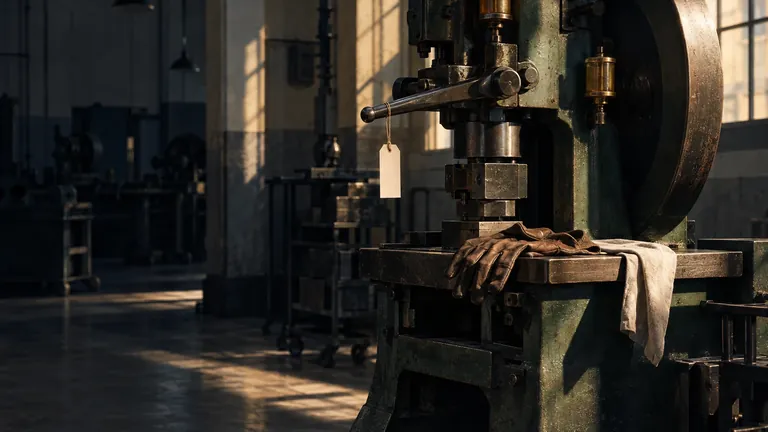
Consider an engineering company near Milan with a hundred and twenty employees. A worker badly injures a hand in a press whose safety barrier had been disabled to speed up a shift; the hand is left permanently weakened. The chief executive, the plant manager who holds a delegation for safety, the head of department and, for its administrative liability, the company are placed under investigation.
The decisive questions differ for each of them. For the chief executive, what matters is whether the delegation was real: a spending budget at the plant manager’s disposal, effective powers, documented periodic checks. For the plant manager and the head of department, what matters is whether they knew the barrier had been disabled and whether the practice was tolerated, because in that case the worker’s conduct falls within the risk area. For the company, what matters is whether a compliance programme was truly in place, with checks on protective devices. The defences of the individuals and of the company may not coincide, and must be set up with that in mind from the start.
08
What to do after a serious accident at work
- Assistance and notifications: help the worker and make the required notifications to INAIL and, in serious cases, to the authorities.
- Do not alter the place or the machine before the inspectorate and the judicial police have examined or seized them.
- Collect and keep the documents: risk assessment document, safety delegations and organisation chart, training records, issue of protective equipment, maintenance logs, minutes of periodic safety meetings.
- Appoint a defence lawyer and a technical expert at once, to take part in the examinations that cannot be repeated.
- Comply on time with the inspectorate’s compliance orders, documenting every measure.
- Assess with the insurer the compensation owed to the worker or their family, which in Italy may go beyond the INAIL benefits.
- For the company, review the compliance programme and, if the legal representative is under investigation, appoint someone to represent it in the proceedings.
In the criminal defence of companies, directors and managers, the firm follows the investigation from the technical examinations onwards, coordinating the position of the individuals with that of the company.
Laws and rulings cited
The sources this article relies on, checked against the official text on the date shown.
- Legislative Decree no. 81 of 9 April 2008, arts 16 and 17 (opens in a new window) Conditions for a delegation of functions, the delegating employer’s duty of oversight and non-delegable duties.
- Legislative Decree no. 81 of 9 April 2008, arts 2, 19 and 299 (opens in a new window) Employer, manager and supervisor, supervisors’ duties and de facto exercise of powers.
- Italian Criminal Code, arts 589, 590 and 583 (opens in a new window) Penalties for negligent homicide and injury at work, automatic prosecution, definition of serious and very serious injury.
- Legislative Decree no. 231 of 8 June 2001, art. 25-septies (opens in a new window) Fines and disqualification measures for the company in cases of negligent homicide or injury at work.
- Legislative Decree no. 758 of 19 December 1994, arts 20, 21 and 24 (opens in a new window) Inspectorate’s compliance order and extinction of minor offences on payment of a quarter of the fine.
- Court of Cassation, Criminal Section IV, judgment of 4 November 2025 (filed 17 November 2025), no. 37405 (opens in a new window) A delegation relieves the employer only if it transfers real powers, including spending powers; liability remains for choice and oversight.
- Court of Cassation, Criminal Section IV, judgment of 17 December 2024 (filed 24 March 2025), no. 11603 (opens in a new window) A worker’s carelessness excludes the safety officer’s liability only if it falls outside the risk area of the work.
- Court of Cassation, Criminal Section IV, judgment of 29 April 2025 (filed 14 June 2025), no. 22438 (opens in a new window) Probation with suspension of proceedings is not available to a company charged under Legislative Decree no. 231 of 2001.